
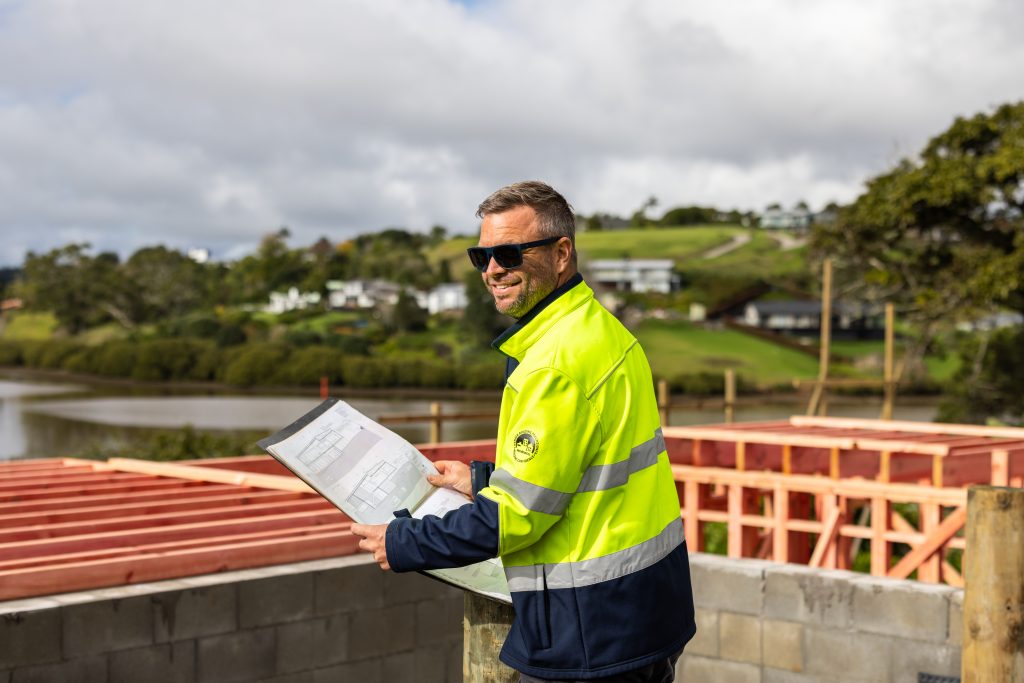
A well-designed home can look effortless on the finished site. Getting it there rarely is. For anyone choosing an architectural home builder in Northland, the decision is about more than finding a team that can interpret drawings. It is about choosing builders who understand the land, coordinate the detail, communicate clearly and protect the quality of the design from first excavation through to handover.
Architectural homes tend to ask more of every part of a build. They may have complex rooflines, large spans, bespoke joinery, carefully placed glazing, exposed structural elements or materials that need exact installation. In Northland, those details also need to work with coastal air, high rainfall, steep or remote sites, wind exposure and the practicalities of getting trades and materials to site.
What an architectural home builder in Northland should manage
An architectural build is not simply a standard plan with upgraded finishes. The home is usually designed around a particular site and a particular way of living. Its success depends on the builder being able to turn detailed design intent into practical construction decisions without losing the character that made the design worthwhile.
That starts with reading the full project, not just pricing a set of plans. A capable builder will look closely at access, earthworks, drainage, retaining, service connections, structural requirements, weather exposure and the sequence of work. These early considerations influence budget, programme and buildability long before the first wall is framed.
The strongest building relationships are collaborative. Architects, engineers, consultants, suppliers and owners all bring different information to the project. The builder’s role is to bring that information together on site, identify issues early and keep decisions moving. That is especially valuable where a design includes custom details that have not been built in exactly the same way before.
A good question to ask is not just, “Can you build this?” Ask, “How will you manage the difficult parts?” The answer should be practical and specific. It should cover how the team will plan the site, coordinate specialist trades, check critical details and keep you informed when choices need to be made.
Start with the site, not the floor plan
Northland sites can be generous, beautiful and demanding in equal measure. A coastal section may offer wide views but face salt-laden air and strong winds. A rural site may require a long driveway, careful earthworks, on-site wastewater systems and thoughtful planning for deliveries. Sloping land can create opportunities for a home that sits naturally in the landscape, but it may also need retaining, engineered foundations and a more involved construction sequence.
These factors should shape the build approach from the outset. Site preparation is not separate from the house build. Poor access or inadequate drainage can affect the programme, the quality of finished work and the long-term performance of the property.
This is where broad regional construction experience matters. A team with capability across site works, civil preparation and residential construction can assess how each stage affects the next. Rather than treating the house as an isolated structure, they can plan the wider site as one coordinated project.
For owners, this provides a clearer picture of where costs sit. A lower building price can be misleading if essential site work, retaining, access or service requirements have been allowed for only loosely. The right builder will help separate provisional items from known costs and explain where further investigation is needed before a firm commitment can be made.
Look for evidence of detailed workmanship
Architectural homes are judged in the details people see every day: clean junctions between materials, consistent cladding lines, carefully installed flashings, precise cabinetry, level floors and well-resolved transitions from indoors to outdoors. Just as important are the details no one sees once the project is complete, including waterproofing, insulation, structural connections and drainage.
When assessing a builder, look beyond polished photography. Ask about projects with similar challenges, whether that is a steep section, extensive glazing, exposed timber, a complex roof form or a high-specification interior. Relevant experience gives the builder a stronger starting point for identifying risks and organising the work.
It is also useful to understand who will be responsible on site. Architectural work benefits from experienced site leadership because decisions often need to be made while work is underway. A well-organised site manager can protect the sequence of trades, maintain quality checks and raise questions before an issue becomes expensive to correct.
At Procraft Construction, this practical approach is supported by experience across architectural homes, renovations, civil works and community projects throughout the region. That breadth is valuable when a residential build needs both fine workmanship and confident management of the surrounding site.
Make the budget part of the design conversation
A realistic budget does not limit good design. It gives the project a framework for making sound choices. The earlier a builder is involved, the easier it is to test the cost and construction implications of materials, structural features and site conditions before they become fixed expectations.
Some parts of an architectural home are worth protecting because they define the way the home performs or feels. Orientation, thermal comfort, durable external materials and well-designed living spaces often have a long-term return. Other choices may offer room for adjustment, depending on priorities. The key is to make these trade-offs deliberately rather than under pressure late in the build.
A transparent quote should make allowances and exclusions easy to understand. It should also explain how variations will be managed. Variations are not always a sign of poor planning. They can arise from unforeseen ground conditions, council requirements, client changes or supply availability. What matters is that they are identified promptly, priced clearly and approved before the work proceeds where possible.
Avoid choosing solely on the lowest number. A price that appears attractive at the start may not include the level of project management, site preparation or specification detail required to deliver the intended result. Compare scope as carefully as cost.
Communication keeps complex builds on track
Architectural projects involve decisions at every stage. Some are straightforward, while others affect cost, timing or the appearance of the finished home. Regular communication gives owners confidence that the programme is being managed and that decisions are being made with the full project in mind.
Before construction begins, agree on how updates will be provided, who has authority to approve changes and how questions from site will be handled. During the build, clear records of selections, variations and programme changes prevent misunderstandings from growing.
The builder should be approachable enough for honest conversations and disciplined enough to give direct advice when an idea creates a practical problem. That balance is essential. Good builders do not simply agree with every request. They explain the implications, offer workable alternatives and help the project move forward.
Choose for the life of the home
A home designed for Northland should be considered beyond handover day. Materials, drainage, ventilation, maintenance access and weather protection all influence how the property performs over time. This is particularly relevant near the coast, on exposed ridgelines and in rural locations where maintenance can be more involved.
The best result is a home that still feels considered years after construction: comfortable in changing seasons, durable in local conditions and resolved in the details that matter to the people living there. Choosing the right builder gives the design the practical care it needs to become that kind of home.