
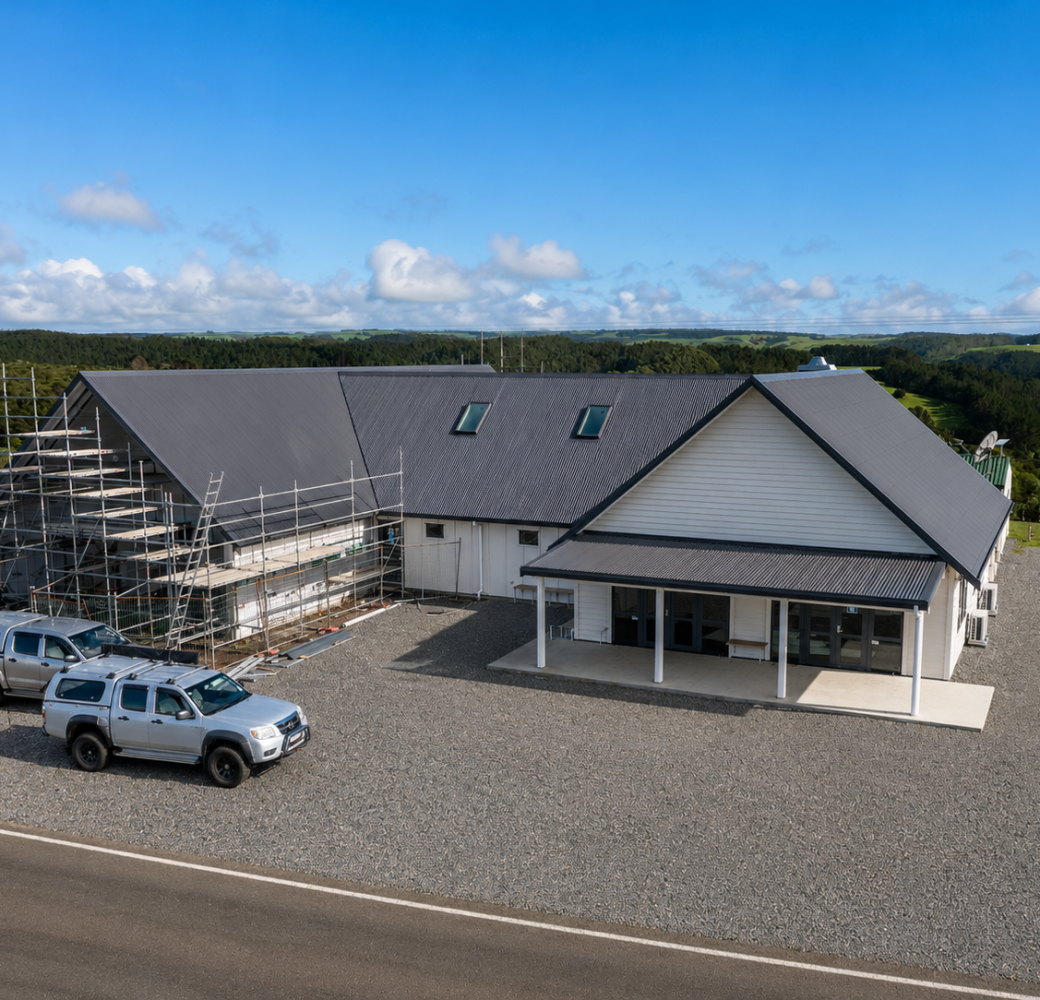
A marae build is never simply another construction project. Marae construction Northland work can involve a wharenui, wharekai, ablutions, administration spaces, parking, access, drainage and future infrastructure – all while supporting a place of gathering, learning, remembrance and connection for whānau.
That changes how a project should be planned and delivered. Good workmanship still matters, as do programme, budget and compliance. But the build must also respect the leadership of mana whenua, the purpose of the site, and the way the facilities will serve people over decades rather than just the handover date.
Start with the people and purpose of the marae
Every marae has its own history, tikanga, aspirations and practical pressures. One project may be centred on replacing an ageing dining hall so it can host larger hui. Another may focus on creating accessible toilet facilities, improving a kitchen, building accommodation, or developing a new community space for kaumātua, rangatahi and visiting whānau.
The first task is to establish what success looks like for the people who will use the building. That conversation should be led by the marae committee, trustees, hapū or iwi representatives, with input from those responsible for day-to-day operations. A builder can bring construction experience and practical advice, but should not assume the cultural brief.
Clear early discussions help identify priorities that may not appear on a standard building brief. These can include the flow of visitors during pōwhiri, separation of service areas, kitchen capacity for major gatherings, storage for tables and equipment, accessibility for all ages, or the need to stage work around scheduled hui and tangihanga.
When these matters are understood from the outset, design and construction decisions are less likely to create expensive changes later. It also gives the project team a stronger basis for making trade-offs when budget or site conditions require them.
Planning marae construction in Northland
Northland offers particular opportunities and challenges for community building projects. Many marae are in rural locations, where access, site services and weather exposure need careful consideration. Coastal conditions can increase corrosion risk, while steep or soft sites may require significant earthworks, drainage and retaining before the building work begins.
A practical feasibility stage is worth the time. It should consider the condition of existing buildings, land contours, vehicle access, stormwater routes, wastewater capacity, power supply and the availability of suitable materials and trades. If the project is an extension, the team also needs to understand how the existing structure was built and whether it can accommodate the proposed changes.
Consent requirements must be addressed early. Depending on the scope, this may involve building consent, resource consent, engineered design, fire safety provisions, accessibility requirements and services approvals. The right pathway depends on the project and local planning rules, so early engagement with experienced designers, engineers and council can prevent avoidable delays.
Programme planning also needs to recognise the marae calendar. There may be periods when the site cannot be disrupted, or dates that require the wharekai and parking areas to remain operational. In some cases, construction can be staged to keep essential facilities open. In others, a shorter but more intensive construction period may be the better option. There is no one-size-fits-all answer.
Build a realistic budget from the ground up
A preliminary budget based only on floor area can be misleading, particularly on a rural or complex site. Site preparation, drainage, wastewater systems, retaining, access roads, demolition and utility upgrades can make up a significant part of the cost before the building itself takes shape.
The most useful budget is one that separates these elements clearly. It lets the committee see where funds are being allocated and make informed decisions about priorities. For example, it may be sensible to complete earthworks and core services now, then allow for a later stage that expands accommodation or adds covered outdoor areas.
Durability should be considered alongside the initial price. A lower-cost cladding, fixture or finish may not provide the best value if it requires frequent maintenance in a harsh coastal environment or under heavy community use. The right choices depend on the building, available maintenance resources and the expected level of use.
Design for mana, use and long-term care
Marae buildings need to perform well on busy days, not just look good when they are empty. That means considering practical details such as wide circulation areas, easy-clean finishes, commercial-scale kitchen workflows, ventilation, secure storage, exterior lighting and entrances that work in wet weather.
Accessibility deserves the same attention. Safe paths, sensible gradients, accessible bathrooms and clear movement through the building help ensure tamariki, kaumātua and people with disabilities can take part fully. These provisions should be integrated into the design, rather than treated as a late compliance item.
Energy performance is another long-term consideration. Northland’s climate can be warm and humid, but buildings still need effective insulation, moisture control, ventilation and heating solutions. Good orientation, shading and natural airflow can improve comfort and reduce operating costs, while suitable materials can help manage condensation and withstand the local environment.
Design details may carry cultural significance, whether through layout, finishes, carving, weaving, artwork or other elements determined by the marae. These require enough time in the programme and close coordination with the people creating them. Rushing these components to meet a construction deadline can undermine both quality and process.
The value of a capable local construction team
A marae project brings many moving parts together: designers, engineers, consent authorities, suppliers, subcontractors, cultural advisors and the client group. A builder with broad Northland experience can coordinate those parts while keeping the work grounded in what is achievable on site.
This is especially valuable where a project includes civil work as well as buildings. Earthworks, stormwater, retaining, foundations and access need to be sequenced correctly. Managing them as connected parts of one project can reduce handover gaps and help identify site issues before they affect the building programme.
Regular communication matters just as much as technical capability. Committees often need clear updates to take decisions back to trustees, whānau or funding partners. Reporting should explain progress, upcoming decisions, variations and programme risks in plain language. A problem raised early is usually more manageable than one discovered after work has been completed.
At Procraft Construction, this practical approach is supported by experience across community facilities, marae developments, civil works and complex Northland building sites. The focus is on delivering the agreed scope with care, clear coordination and workmanship that stands up to regular use.
Respectful site practice is part of quality
Site conduct is not separate from construction quality. It includes understanding site access protocols, maintaining a tidy and safe work area, communicating before disruptive work begins, and treating the marae environment with respect throughout the project.
The project team should agree on these expectations before site establishment. This may cover who is authorised to make day-to-day decisions, how visitors and subcontractors are briefed, where materials can be stored, and how the team will respond if work encounters an unexpected issue. Clear expectations protect relationships as well as the programme.
A handover should prepare the marae for the years ahead
The completion of physical work is a significant milestone, but a useful handover goes further than keys and compliance paperwork. Marae representatives should understand how building systems operate, what maintenance is needed, which warranties apply and who to contact if a fault arises.
A well-organised close-out package can include maintenance information, product details, certificates, as-built records and operating guidance for equipment. This is particularly helpful where committee roles change over time. Good records make future repairs, upgrades and insurance discussions much easier.
Allowing for a post-completion review can also be worthwhile. Once the building has hosted a few events, users may identify small adjustments that improve daily operation, such as additional hooks, better signage, changed storage layouts or alterations to lighting controls.
The best first step for a marae project is a conversation that brings the vision, site realities and intended use into the same room. With the right planning and a construction partner who listens, the result can be a facility that carries its purpose well for generations to come.